



For companies that use dry ice regularly, one of the most important purchasing decisions is not simply which machine to buy. It is whether dry ice should be produced on-site at all, or whether it makes more sense to continue purchasing it from an external supplier. Both models can work well. The better choice depends on demand volume, delivery conditions, liquid CO₂ availability, storage time, operating resources and the level of supply control the business needs.
The decision is often oversimplified into a single question: “Which option is cheaper?” In practice, cost is only one part of the picture. Purchased dry ice has a visible delivered price, while on-site production introduces equipment investment, liquid CO₂, electricity, labor, maintenance and storage planning. At the same time, producing on-site can shorten the time between production and use, reduce dependence on delivery schedules and give the user more control over output timing. A useful comparison therefore needs to look at the full operating system rather than one price number.
Two Different Supply Models
Buying dry ice means that the production process is handled by a supplier. The user places an order, receives pellets or blocks, stores them temporarily and consumes them as needed. This model can be simple and practical when demand is low, usage is occasional or a reliable supplier is located nearby.
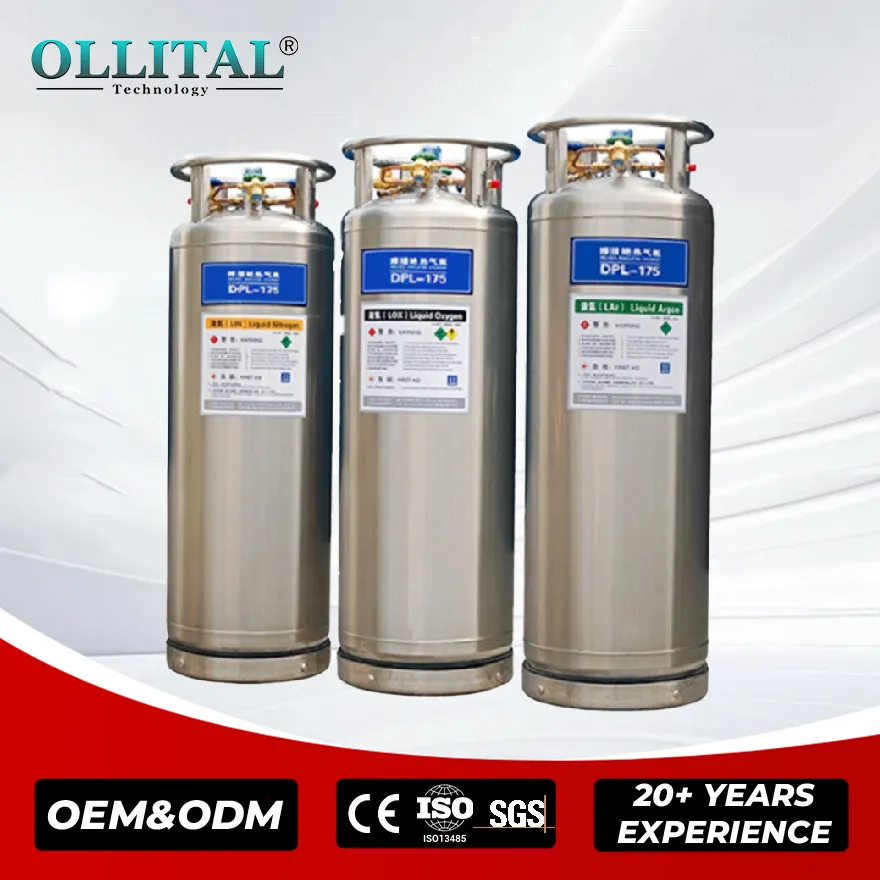
On-site production moves the production step inside the facility. A typical system combines a dry ice production machine, an upstream liquid CO₂ storage system, suitable handling or short-term storage, and the downstream application. The user takes on more responsibility, but gains direct control over when dry ice is produced and how much is made.
Compare the Total Cost Structure, Not Just the Purchase Price
The easiest mistake in this comparison is to treat the supplier’s price per kilogram as directly equivalent to the operating cost of an on-site machine. They are not the same type of number. A delivered dry ice price normally reflects the supplier’s production, handling, packaging, logistics and commercial margin. On-site production separates those costs into the inputs and resources used inside your own facility.

On-site production and purchased dry ice involve different cost structures, and the right comparison should account for all relevant operating inputs.
| Cost Area | On-Site Production | Buying Dry Ice |
|---|---|---|
| Raw material | Liquid CO₂ purchased by the user | Included in supplier price |
| Electricity | Machine and related equipment power | Usually embedded in supplier price |
| Labor | Operation, monitoring and handling | Mainly receiving and internal handling |
| Maintenance | Routine machine service and wear parts | Normally handled by supplier |
| Delivery / freight | CO₂ still needs supply, but dry ice can be made on demand | Can be a meaningful part of delivered cost |
| Storage loss | Depends on time between production and use | May begin before delivery and continue during storage |
| Capital investment | Required for equipment and infrastructure | No production equipment investment required |
For this reason, the most useful comparison is usually based on annual or monthly total cost rather than a single quoted price. If a site buys large volumes repeatedly, recurring delivery and supplier margins may become significant. If demand is small or irregular, the fixed investment and operating responsibility of an on-site system may be harder to justify.
Supply Reliability Can Matter as Much as Cost
Dry ice is a consumable that disappears continuously through sublimation. That makes supply timing unusually important. A business that relies on external deliveries must coordinate order quantity, delivery schedule, storage capacity and actual consumption. If the supplier is far away, demand is unpredictable or logistics are disrupted, the facility may need to carry more buffer stock.
On-site production changes this relationship. Instead of waiting for a dry ice delivery, the user can produce closer to the time of use, provided that liquid CO₂ is available and the production system is ready to operate. That can be especially valuable for operations where cleaning, cooling or process demand changes from day to day.

On-site production can improve freshness and supply responsiveness, while purchased dry ice depends more heavily on supplier scheduling, transport and storage time.
This does not mean on-site production eliminates supply risk. It changes the type of risk. The facility now depends on liquid CO₂ supply, equipment reliability, trained operation and appropriate storage. A well-planned system should therefore evaluate both the upstream CO₂ supply and the downstream dry ice demand.
Freshness and Storage Time Affect the Usable Quantity
Dry ice begins sublimating as soon as it exists. The practical value of producing on-site is that the time between production and use can be shortened. When the dry ice is consumed soon after production, there is less opportunity for storage-related loss. This can be important in applications where the site wants fresh pellets available close to the operating schedule.
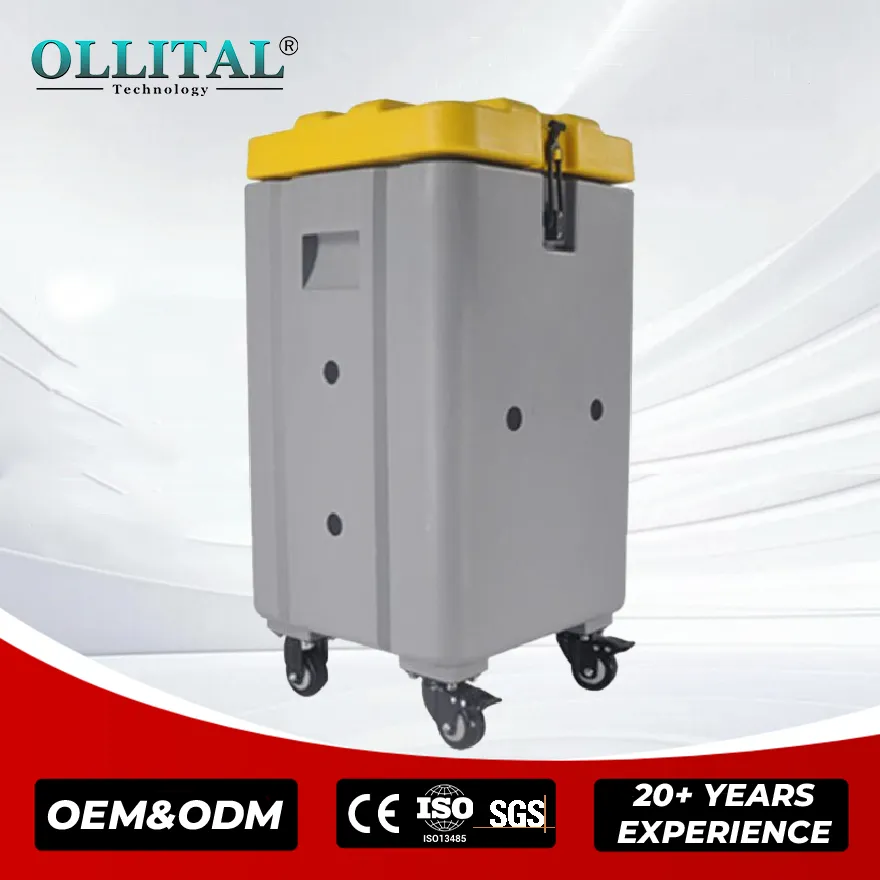
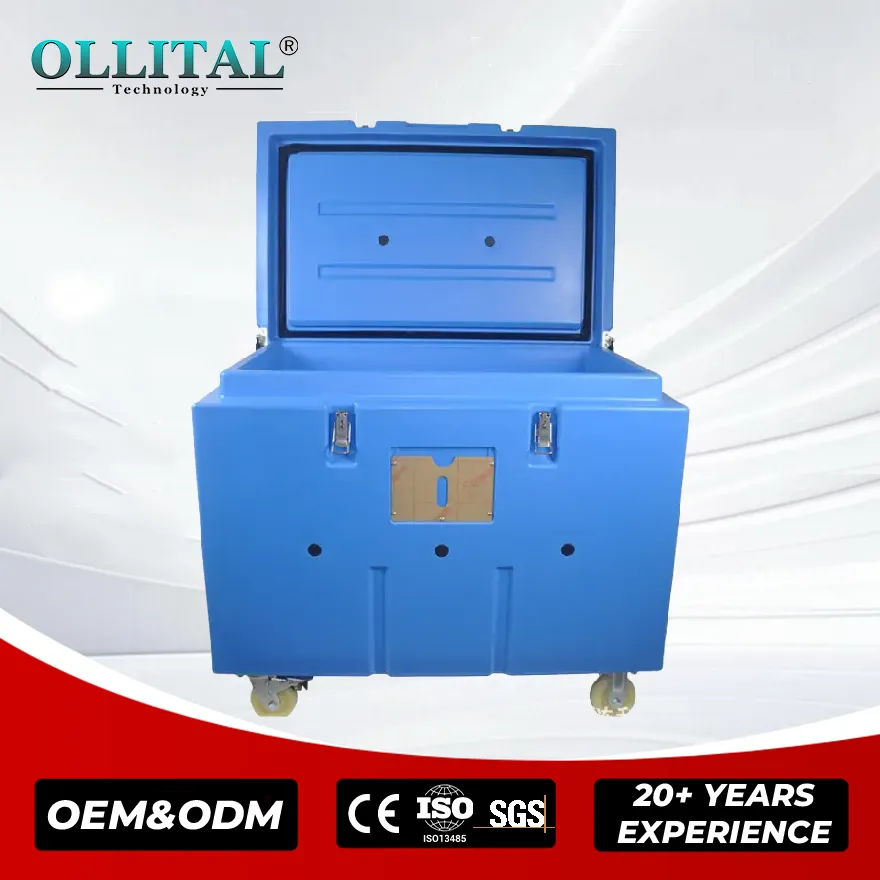
Purchased dry ice can also perform well, but the user should account for the total time spent in supplier storage, transport, receiving and internal storage. An insulated dry ice storage box can reduce heat transfer and make handling easier, but no storage container completely stops sublimation. The longer the time before use, the more important storage planning becomes.
Demand Volume Is the First Question to Answer
Before comparing ROI, the business should define how much dry ice it actually uses. A site consuming only small quantities a few times per month has a very different economic profile from a factory using dry ice every day across multiple shifts.
• Low or occasional demand: Buying may be more practical because the user avoids machine investment, maintenance and operating responsibility.
• Regular medium demand: Either model may work; the result depends heavily on local delivered dry ice price, liquid CO₂ price, delivery distance and production hours.
• High recurring demand: On-site production becomes more attractive to evaluate because the equipment can be utilized more consistently and recurring purchased-dry-ice costs may be significant.
• Unpredictable peak demand: On-site capacity may provide more schedule control, but only if the machine and liquid CO₂ supply can support the required peak output.
If you are still determining the correct hourly production level, use the same logic as a capacity-selection exercise: daily demand, available production hours and future growth should be considered together. The current OLLITAL range includes multiple output levels, allowing users to match the dry ice production machine range to the actual scale of the operation.
How to Compare ROI Without Using a Fake Universal Payback Period
There is no credible universal statement such as “an on-site dry ice machine pays for itself in six months” or “on-site production is always 30% cheaper.” Those claims depend on local prices, machine utilization and the amount of dry ice being replaced. A better approach is to build a site-specific comparison.
Estimated annual purchased-dry-ice cost = delivered price per kg × annual usable dry ice demand
Estimated annual on-site cost = liquid CO₂ + electricity + labor + maintenance + storage / handling + other site-specific operating costs
Simple annual savings = purchased-dry-ice cost − on-site operating cost
Simple payback period = total initial on-site investment ÷ estimated annual savings
This calculation is intentionally simple. A more complete financial model may also include financing, depreciation, installation, floor space, CO₂ tank investment, taxes and the value of improved supply continuity. The point is not to force the decision toward on-site production, but to compare both models using the same assumptions.
When On-Site Production May Make More Sense

The better supply model depends on demand, logistics, access to liquid CO₂, machine utilization, available resources and the value of control over production timing.
• Demand is regular and high enough: The machine can be utilized consistently rather than sitting idle for long periods.
• Delivered dry ice is expensive or difficult to schedule: Frequent transport, long delivery distances or inconvenient supplier schedules can strengthen the case for local production.
• Fresh dry ice is valuable to the application: Producing closer to the time of use can reduce the need to hold large inventories.
• Liquid CO₂ is available at a practical cost: A reliable upstream supply is essential because the economics of on-site production depend heavily on the raw material.
• The site has suitable space and operating resources: The user can accommodate the machine, CO₂ storage, ventilation, handling and routine maintenance.
• The business values supply control: Production can be scheduled around internal demand rather than around supplier delivery windows.
When Buying Dry Ice May Be the Better Choice
• Usage is low or infrequent: The business may not produce enough dry ice to justify the equipment and infrastructure.
• The project is temporary: A short-term or one-time requirement may be easier to serve with purchased dry ice.
• A dependable local supplier is nearby: Short lead times and competitive delivery can reduce the operational benefit of producing on-site.
• The site does not want additional equipment responsibility: Buying shifts production, machine maintenance and much of the technical responsibility to the supplier.
• Space or staffing is limited: The facility may not have a practical location for production equipment, CO₂ storage or trained operation.
A Hybrid Model Can Also Be Practical
The decision does not always have to be all-or-nothing. Some users may produce a base quantity on-site and keep an external supplier as backup for unusually high demand, maintenance periods or emergency requirements. Others may begin by purchasing dry ice, collect accurate consumption data, and only invest in production when demand becomes predictable enough to justify it.
A hybrid approach can also help a business learn the true cost of its dry ice consumption before committing to a larger system. Once demand, peak requirements and storage losses are measured, machine capacity and ROI can be modeled with much more confidence.
What Equipment Is Needed for On-Site Production?
A production machine is only one part of the system. A practical on-site setup may also require liquid CO₂ storage, piping and pressure-control components, suitable ventilation, short-term dry ice storage, handling equipment and the downstream application equipment.
For a broader system view, see Dry Ice Production Machine for Industrial Cleaning: Process, Capacity and On-Site Supply. That article explains how liquid CO₂ storage, production, temporary storage and downstream use fit together as one operating system.
Questions to Answer Before Making the Decision
• How many kilograms of dry ice are used per day, week and month?
• How predictable is demand, and what is the highest short-term requirement?
• What is the actual delivered price of purchased dry ice?
• How much dry ice is lost between delivery and use?
• How far away is the current supplier, and how reliable are delivery windows?
• What is the local delivered price and availability of liquid CO₂?
• How many hours per day could an on-site machine operate?
• What machine capacity would match demand without excessive oversizing?
• Does the facility have suitable space for production and CO₂ storage?
• Who will operate and maintain the equipment?
• How much value does the business place on faster access to fresh dry ice?
• Is external supply still needed as backup during maintenance or peak demand?
FAQ
Is producing dry ice on-site always cheaper than buying it?
No. On-site production can become attractive when demand is regular, equipment utilization is good and delivered dry ice is relatively expensive, but the result depends on local liquid CO₂, electricity, labor, maintenance and infrastructure costs.
What is the biggest advantage of on-site dry ice production?
For many users, the main advantage is control over production timing and supply. Dry ice can be produced closer to the time of use instead of relying entirely on external delivery schedules.
What is the biggest advantage of buying dry ice?
Buying avoids the capital investment and operating responsibility associated with owning production equipment. It can be especially practical for low, irregular or temporary demand.
Does on-site production eliminate storage loss?
No. Dry ice still sublimates after production. On-site production can shorten storage time, but insulated storage and good handling practices are still important.
How can I estimate the payback period of a dry ice production machine?
Estimate the annual cost of purchased dry ice, compare it with the expected annual on-site operating cost, calculate the estimated annual savings, and divide the total initial investment by those savings. The result is only as reliable as the assumptions used.
Can I use on-site production and purchased dry ice together?
Yes. A hybrid model can be practical when the site produces normal demand internally but keeps a supplier as backup for peaks, maintenance periods or emergencies.
Conclusion
On-site dry ice production and purchased dry ice are two different supply strategies, and neither is automatically the right answer for every business. Buying is often simpler when demand is small, irregular or temporary. On-site production becomes more attractive to evaluate when demand is recurring, delivery cost is meaningful, supply timing matters and the facility can support the required CO₂ infrastructure and operation.
The best decision comes from comparing total cost, supply reliability, storage time, usable output and operational control using your own numbers. If your site is considering an internal production system, OLLITAL’s dry ice production equipment and liquid CO₂ storage solutions can be evaluated together so machine capacity and upstream supply are planned as one system rather than as separate purchases.