





Choosing a dry ice production system is not only about output capacity. Before comparing price, power consumption, or machine size, the more important question is what form of dry ice your operation actually needs. Some businesses require small cylindrical pellets that can be fed into blasting systems, packed into containers, or distributed across process lines. Other businesses need larger blocks that are easier to store, transport, or use as dense cooling units. That is why the decision between a dry ice pelletizer and a dry ice block machine should start with the application, not with the machine brochure.
Both systems begin with the same upstream raw material—liquid CO₂—and both convert it into solid dry ice. The real difference appears at the forming stage. A pelletizer compresses dry ice snow through a die to produce uniform pellets, while a block machine compresses the same snow into larger molded blocks or slabs. Each output form behaves differently in handling, storage, transport, and downstream use. For that reason, the correct choice is not about which machine is universally better. It is about which machine better fits your workflow, product format requirements, and business model.
Start with the Output Form, Not Only the Capacity
A common purchasing mistake is to focus on hourly kilograms first and only later ask what the dry ice needs to look like. In practice, output form should be defined before capacity is finalized. If the operation is centered on dry ice blasting, a pelletizer is often the more practical direction because the blasting process needs flowable media that can be stored in insulated containers and transferred into a blasting system. If the operation is centered on transport cooling or block distribution, a block machine may be more suitable because it creates larger, denser pieces that are easier to stack and often more practical for longer holding times.

Pellets and blocks come from the same CO₂ source, but the output form changes how the dry ice can be handled, stored, and applied.
| Comparison Area | Dry Ice Pelletizer | Dry Ice Block Machine |
|---|---|---|
| Typical output | Small cylindrical pellets or similar granular forms | Larger solid blocks, bricks, or slabs |
| Best fit | Blasting, process cooling, flexible packing, direct feed use | Cold-chain transport, bulk cooling, longer holding, block sales |
| Handling style | Flowable and easy to meter or pour | Easy to stack and move as larger units |
| Storage behavior | More surface area exposed per unit mass | Lower surface-area-to-volume ratio than small pellets |
| System focus | Die size, pellet size, feedability | Mold size, block dimensions, storage and transport practicality |
How a Dry Ice Pelletizer Fits Industrial Use
A pelletizer is designed for operations that need a convenient, flowable dry ice format. This is especially relevant when the downstream process requires repeated feeding, controlled quantity, or flexible handling. On the OLLITAL website, the dry ice production machine category includes multiple pellet-oriented systems intended for different production scales. These machines convert liquid CO₂ into dry ice snow and then compress the snow through a die to create pellets in defined dimensions.
The practical advantage of pellet output is versatility. Pellets can be used in dry ice blasting, process cooling, lab cooling, food logistics, and many smaller-quantity use cases where users want to meter or distribute dry ice quickly. Because the material is made up of many small units, it is often more convenient to portion or feed, especially when compared with cutting or breaking larger blocks.
That said, pellets are not automatically the better choice for every application. Their smaller size means more exposed surface area, which can translate into faster sublimation if the product is stored for extended periods. For users who need dry ice to travel longer distances or remain in storage for more time before use, a block format may be the more practical solution.
How a Dry Ice Block Machine Fits Storage and Transport Needs
A block machine is designed for users who need larger, denser units of dry ice. This output format is often preferred for bulk cooling, transport, distribution, and applications where a single larger piece is easier to manage than many small pellets. OLLITAL also presents a dry ice block production machine option for customers whose output needs are centered on dry ice blocks rather than pellets.
The block format can bring advantages in storage logic. Larger blocks generally have a lower surface-area-to-volume ratio than small pellets, which means the material can often retain mass better under similar holding conditions. For transport and cold-chain use, that difference can matter. Users may also find blocks easier to stack, separate, and count as larger units rather than manage many small pellets.
However, blocks are not as flexible as pellets in every downstream application. They are not ideal where dry ice needs to flow through equipment, be fed continuously into a blasting hopper, or be portioned into many small use points. That is why output form should always be connected to the operational workflow.
Match the Dry Ice Form to the Application
The most reliable way to decide between a pelletizer and a block machine is to begin with the real application. Instead of asking, “Which machine is better?” it is more useful to ask, “What job will this dry ice perform after it leaves the machine?” Once that question is answered, the output form becomes much easier to define.

Different applications favor different dry ice forms. The downstream job should guide the equipment decision.
• Dry ice blasting: Pellets are normally the preferred format because blasting systems require flowable media that can be fed consistently into the machine.
• Cold chain and food transport: Blocks are often useful where the dry ice must last longer and be positioned in larger solid units around the load, although pellets may still be suitable in some packaging workflows.
• Industrial process cooling: Either format may work depending on how the dry ice is applied, how quickly cooling is needed, and how the material is handled downstream.
• Transport and distribution: Blocks are often favored where stacking and longer travel time matter, while pellets may be chosen where repacking or flexible use is required.
• Process or lab cooling: The right choice depends on the sample size, cooling geometry, and whether small pieces or larger cooling mass are more useful.
• Retail or repacking: Some businesses may use pellets, some may use blocks, and some may need both depending on the sales format and customer expectation.
Storage, Handling, and Sublimation Must Be Considered Early
Dry ice is not a stable long-term stored solid. It begins sublimating as soon as it exists. That means the selected output form should be evaluated together with the expected storage time, transfer distance, and handling method. Pellet production may be ideal when dry ice is produced close to the point of use and consumed quickly. Block production may be more attractive when the dry ice needs to travel, wait, or be held longer before the final application.
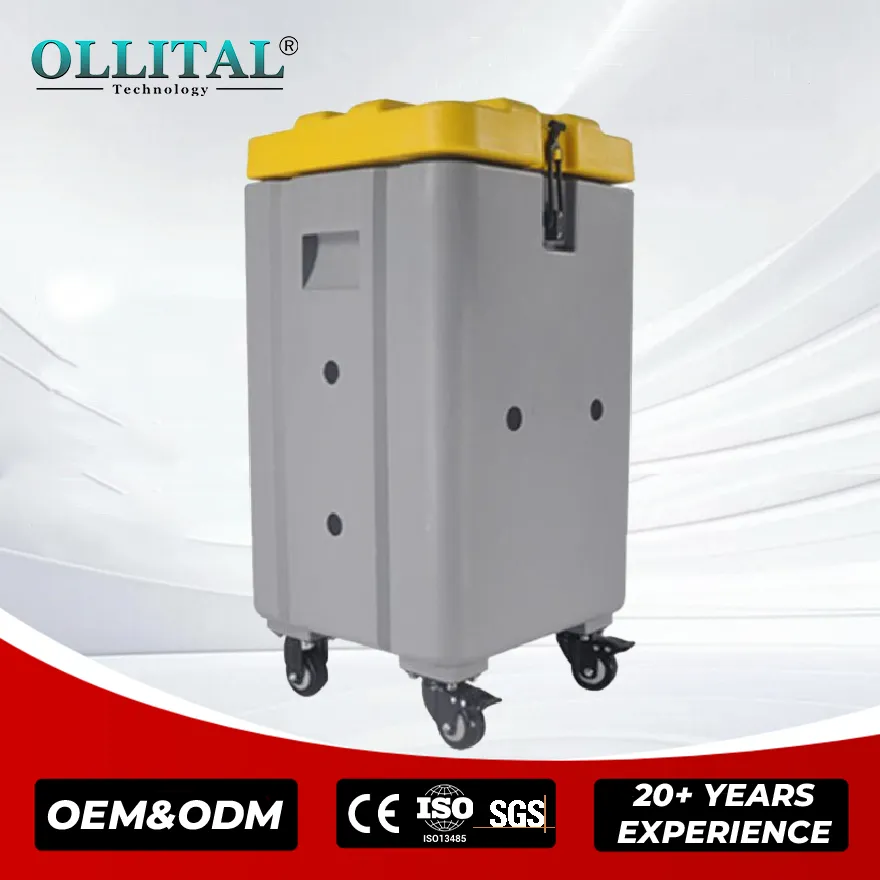
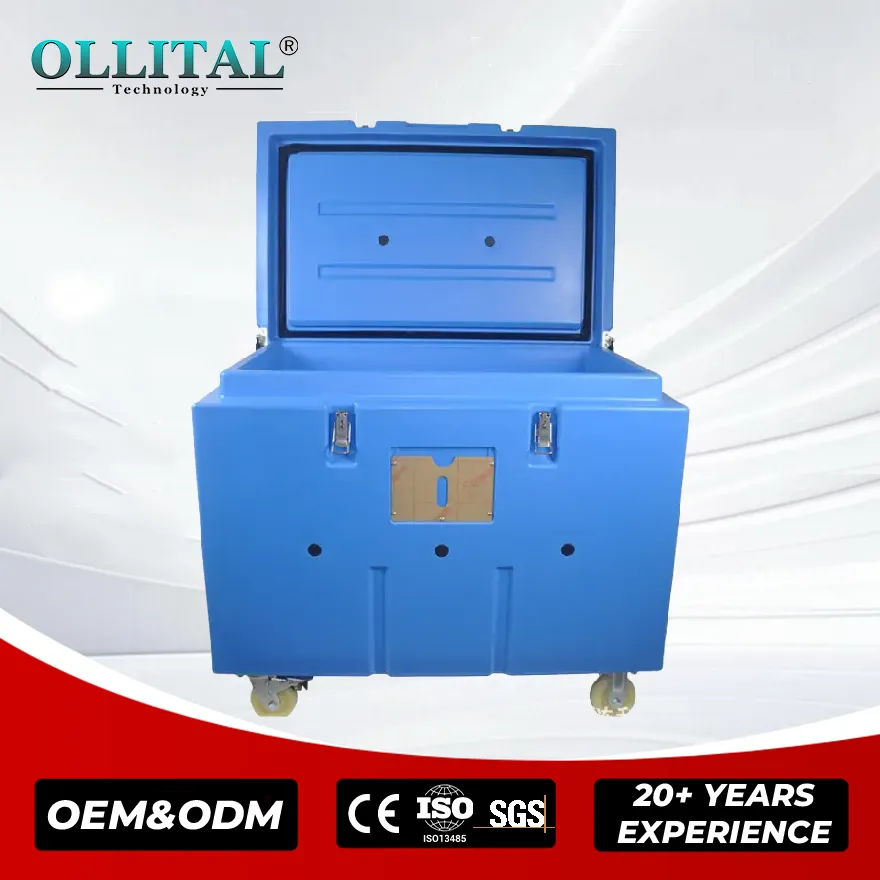
Even with the right output form, suitable storage is still necessary. An insulated dry ice storage box can reduce heat transfer and improve handling, but it does not stop sublimation entirely. The machine choice and the storage plan should therefore be evaluated as one system rather than two separate purchases.
If You Need Both Formats, a Flexible Strategy May Be Better
Some businesses do not fit neatly into one category. A facility may need pellets for blasting or process use, but also need blocks for storage, transport, or external sales. In that case, the best answer may not be “pelletizer or block machine,” but rather “how should both output formats be planned inside one production strategy?”
A flexible strategy may involve separate equipment, staged investment, or a modular production plan. The right path depends on how often the output form changes, how much capacity is needed in each format, and whether downtime during changeover is acceptable. When discussing equipment with the supplier, users should describe not only the desired capacity, but also how frequently they expect to switch between output types.
A Practical Selection Path

A practical selection process starts with output form, then demand, storage time, handling, and machine matching.
A structured evaluation process helps avoid oversizing, undersizing, or selecting the wrong dry ice form for the job. In practical terms, a buyer should work through five basic questions in order. First, define whether the final product needs to be pellets, blocks, or both. Second, measure actual demand in kilograms per hour, shift, or day. Third, check how long the dry ice will remain in storage before use. Fourth, understand the downstream handling method—such as blasting, packaging, stacking, transport, or process cooling. Finally, match the machine around those requirements, including output format, capacity, and liquid CO₂ supply conditions.
Questions to Ask Before Requesting a Quote
• Do you need pellets, blocks, or both?
• If pellets are needed, what pellet size is required by the downstream use?
• If blocks are needed, what dimensions are practical for handling and transport?
• How many kilograms of dry ice are required per hour, shift, and day?
• Will the dry ice be used immediately or stored before use?
• What is the typical storage or transport duration?
• What is the main downstream use—blasting, cooling, transport, repacking, or distribution?
• Do you already have a suitable liquid CO₂ supply and tank arrangement?
• Will the business need only one dry ice form now, or could it need both formats later?
• How much space is available for the machine, storage, and handling workflow?
FAQ
What is the main difference between a dry ice pelletizer and a dry ice block machine?
The main difference is the output form. A pelletizer produces small cylindrical pellets, while a block machine produces larger solid blocks or slabs. This changes how the dry ice can be handled and used.
Which machine is better for dry ice blasting?
A pelletizer is usually the more practical choice because blasting systems require flowable dry ice media that can be fed into the machine consistently.
Which format is more suitable for storage and transport?
Blocks are often more practical for storage and transport because larger pieces generally have a lower surface-area-to-volume ratio than small pellets.
Can one operation need both pellets and blocks?
Yes. Some businesses use pellets for cleaning or process use and blocks for transport or resale. In that case, a flexible production strategy may be the best approach.
Should I choose machine capacity before choosing the output form?
No. The output form should normally be decided first, because it is defined by the final application. Capacity should then be sized around real demand.
Does the machine choice affect liquid CO₂ planning?
Yes. Both pellet and block production depend on liquid CO₂, so tank size, piping, and raw-material planning should be aligned with the selected machine and its running schedule.
Conclusion
The choice between a dry ice pelletizer and a dry ice block machine is fundamentally a workflow decision. Pellets are generally more suitable where flowability, direct feed use, or flexible portioning matters. Blocks are generally more suitable where larger units, transport practicality, or longer holding time matters. Neither is automatically superior. The right choice depends on what the dry ice must do after it leaves the machine.
If you are evaluating equipment, begin with the application, define the output form, confirm the demand level, review storage and handling requirements, and then compare the appropriate machines. For more details, review the OLLITAL dry ice production machine solutions and discuss your specific production goal with the team so the system is selected around real operational needs.
Need help choosing between pellet and block dry ice production?
Share your target output form, estimated demand, storage time, and downstream application, and OLLITAL can help you evaluate a more suitable production configuration.
Contact OLLITAL